Filmform (est. 1950) is dedicated to preservation, promotion and worldwide distribution of experimental film and video art. Constantly expanding, the distribution catalogue spans from 1924 to the present, including works by Sweden’s most prominent artists and filmmakers, available to rent for public screenings and exhibitions as well as for educational purposes.
The story of Condemned to the Asylum is based on a real event that took place in Stockholm in the summer of 1838, when the artist Carl Samuel Graffman was arrested by the king’s secret police. I was strongly gripped by this human fate and together with the artist Jan Håfström we began to find out more about Carl Samuel Graffman’s fate and write the script for the film. The film Dömd till dårhus is based to some extent on a contemporary writing by the doctor Dr. Sondén about life in Danvikens dårhus, he called it hell on earth. “These damp-dripping dungeons were not made for humans.” The mental hospital was housed in the old saltworks at the entrance to Stockholm. Graffman had been brought there after being involved in a popular uprising against the then king, Carl XIV Johan. Several had been killed by the police and military, as they tried to stop the revolution that could have broken out. The demonstrators had been impressed by the democratic winds that swept across Europe in the summer of 1838. In Castenhof’s basement, even the chief of police, Crusenstolpe, had urged the diners to turn up the revolutionary song Marseljässen. Among the guests was Graffman who slammed two pistols on the table and exclaimed “let the cursed Russian come here, I’ll make sure he doesn’t get out of here alive”.
Screenplay: Jan Håfström and Anders Wahlgren.
Director, photo and cut: Anders Wahlgren.
Cast: Staffan Olzon, Jan Blomberg, Åke Fridell, Hans Jonstoj and Helena Brodin.
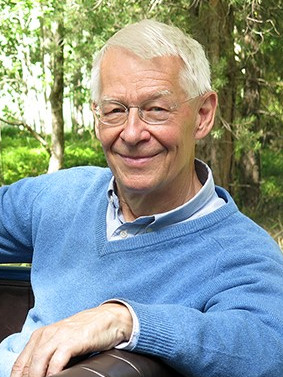
Born in Stockholm 1946. Art and architecture historian. Director, writer and curator. Started as a young man making short films for an experimental scene in Stockholm – the Pistolteatern between the years 1964 – 1967. The films were independent and included in plays and happenings. Collaborated with, among others, Öyvind Fahlström, Åke Hodell, Evan Storm and Staffan Olzon. 1968 short film “A portrait of Claes Oldenburg”. Employed at Sweden’s Radio and Television 1969–1989. Working since then as a freelancer. Directs, writes books, essays and film scripts. Has made more than ninety documentaries. In addition, ten feature films for cinema. Has been awarded several domestic and foreign film awards in New York, Paris, Sorrento and Ghent. The film “Sigrid and Isaac” received the jury’s grand prize at the film festival in Montreal 2007. The highly acclaimed film, “The town in my heart” 1992 about Stockholm’s transformation, followed by “Soul of the city” the following year. “The hunt for the mechanical ballet” 1993. The first feature film “Condemned to a madhouse” about the artist Carl Samuel Graffman in 1976, then, “The beautiful is difficult”, about the artist Carl Fredrik Hill 1985. “Moa, a woman’s love and longing” 1986. “The dying dandy”, about the artist Nils Dardel 1989. “True Moments” 1998. “Sigrid and Isaac” 2005, “Forbidden love” – a film about the Swedish Crown Princess Victoria and Axel Munthe, 2016. “Mr. Funkis” 2022. All films from own script.
Jan Håfström
Jan Håfström studied at the Royal Academy of Fine Arts in Stockholm and is one of his generation’s most acclaimed painters and sculptors. Additionally, Håfström has also worked with film as an artform since the 1960’s where he has both directed and participated in several films.
Together with Claes Söderquist he made the short film Le Génie Civil in 1967, which consists of stills from technical journals from the 19th century. This consideration of Western technology optimism and the emergence of modernity gained a commendation in the Orient that Håfström did on his own that same year. Together, the two films explore and thematize memory and history writing, where the Eurocentric worldview is exposed to dissection.
Jan Håfström has said that he learned to dream in the cinemas, and the film’s suggestion power can also be seen as a recurring motif in his painting and graphics, where the popular culture templates are reused to make a journey into the interior of the western civilization. One of Håfström’s favorite references is Joseph Conrad’s novel Heart of Darkness, and like his protagonist Marlowe, he has made a journey into the painful points of memory.