Filmform (est. 1950) is dedicated to preservation, promotion and worldwide distribution of experimental film and video art. Constantly expanding, the distribution catalogue spans from 1924 to the present, including works by Sweden’s most prominent artists and filmmakers, available to rent for public screenings and exhibitions as well as for educational purposes.
An interview conducted with Mai Zetterling during the summer 1984 in her house in southern France. It has been seventeen years since Flickorna was made in Sweden, a film met with negative critique. Zetterling dicusses why she left Sweden and lingers on decisive moments of her life; the period at Dramaten, to be a celebrated actress and later on to enter the male dominated field of directing. A guiding star in Zetterling’s life has been to contastly broader her horizon.
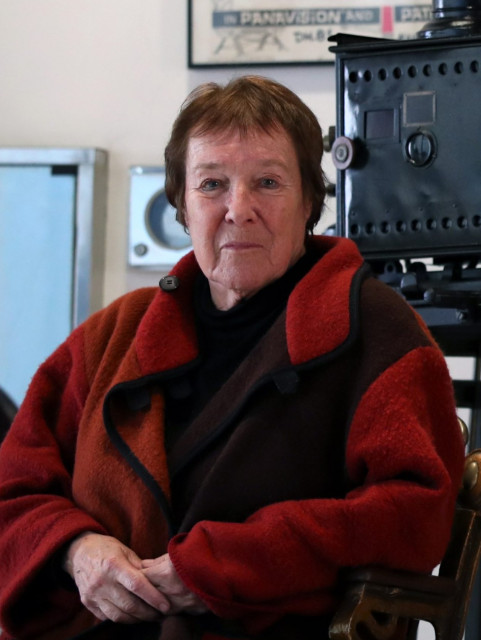
Solveig Nordlund (b. 1943, Stockholm) started her studies in cinema at Stockholm University and later began her filmmaking career in Portugal, working together with several Portuguese directors such as Manoel de Oliveira and Alberto Seixas Santos, among others. In 1974 she ventured into directing within the cooperatives Cinequipa, Cinequanon and Grupo Zero, which she herself founded, and also worked in collaboration with Teatro da Cornucópia.
Between 1980 and 1999 she divided her time between Portugal and Sweden, filming numerous documentaries for both Swedish Television and RTP, both short and feature length productions. Apart from this, Nordlund is also the founder the production company Torromfilm through which several of her films are produced. While she has been productive within cinema, she has also worked with theater, making her debut with ’A Noite é Mãe do Dia’ at the Malaposta Theatre.
Her long and productive career has been the subject of retrospectives at both the Swedish and Portuguese Cinematheques and her life-long contribution to cinema was honoured at the 6th edition of the Porto Femme International Film Festival in 2023.
Currently Nordlund has recently completed her feature length documentary about Teatro da Cornucópia and is in the post-production phase of another feature length documentary about Casa do Artista in Portugal, showing her continued contribution to cinema and the documentary.