Filmform (est. 1950) is dedicated to preservation, promotion and worldwide distribution of experimental film and video art. Constantly expanding, the distribution catalogue spans from 1924 to the present, including works by Sweden’s most prominent artists and filmmakers, available to rent for public screenings and exhibitions as well as for educational purposes.
What happens in the spaces between place and person? Between places and human history? And the place and its memory? My hometown Kiruna is going to be razed and relocated. The old company town Bolagsområdet, where I grew up, will collapse down into the underground because the bedrock is breaking below, from a century of ore mining.
In 2015, I filmed the Ullspiran area while it was being razed, documenting the last family moving out. Inside their apartment, I found traces of lives lived there. When we know we have to move, when faced with the fact, we abandon our sense of belonging. We gradually accept reality and the dust collected in the corners lose their significance.
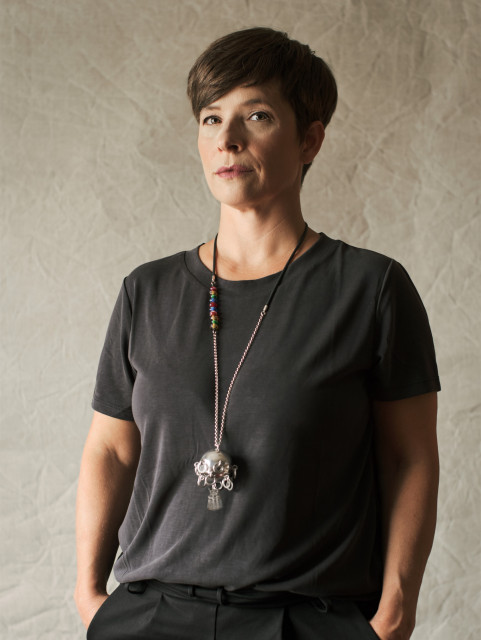
Liselotte Wajstedt, born in 1973 in Kiruna and currently based in Stockholm, works as a director and screenwriter, while also engaging in installation and visual art. Through her extensive body of experimental moving image work, she explores aesthetics and politics with recurring themes such as heritage, abuse, and identity.
Her experimental work includes more than two dozen short and feature-length films. Through hybrid documentary, experimental media, music video, dance, and fiction film, Wajstedt employs a wide range of styles and techniques in service of her political and artistic expressions, including animation, claymation, stop-motion, and superimposition. Many of Wajstedt’s films explicitly or implicitly engage with multiple and hybrid subject positions, as evident in EADNI (2023), Tystnaden i Sápmi (2022), Sire och den sista sommaren (2022), Kiruna–Rymdvägen (2013), Sami Daughter Joik (2008), and The Lost One (2014).