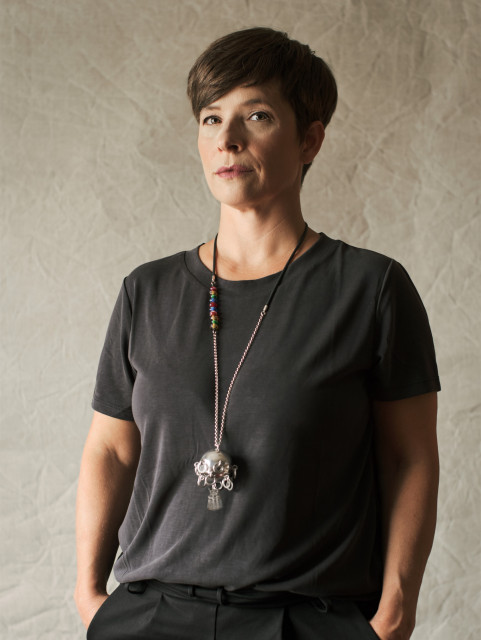
Filmform (est. 1950) is dedicated to preservation, promotion and worldwide distribution of experimental film and video art. Constantly expanding, the distribution catalogue spans from 1924 to the present, including works by Sweden’s most prominent artists and filmmakers, available to rent for public screenings and exhibitions as well as for educational purposes.
I use the samish traditional dress in different hypothetical situations and contexts. How will it be to wear it, will I find it comfortable?
This movie is a part of a jojk, it is my jojk without the singing. The jojk is traditionally used to remember or dedicate something to something or someone. A jojk, can be about longing. I have been denied to be a sami, my language has been taken away, aswell as my traditional costume and my culture. I want to recapture lost knowledge and culture.
Liselotte Wajstedt, born in 1973 in Kiruna and currently based in Stockholm, works as a director and screenwriter, while also engaging in installation and visual art. Through her extensive body of experimental moving image work, she explores aesthetics and politics with recurring themes such as heritage, abuse, and identity.
Her experimental work includes more than two dozen short and feature-length films. Through hybrid documentary, experimental media, music video, dance, and fiction film, Wajstedt employs a wide range of styles and techniques in service of her political and artistic expressions, including animation, claymation, stop-motion, and superimposition. Many of Wajstedt’s films explicitly or implicitly engage with multiple and hybrid subject positions, as evident in EADNI (2023), Tystnaden i Sápmi (2022), Sire och den sista sommaren (2022), Kiruna–Rymdvägen (2013), Sami Daughter Joik (2008), and The Lost One (2014).