


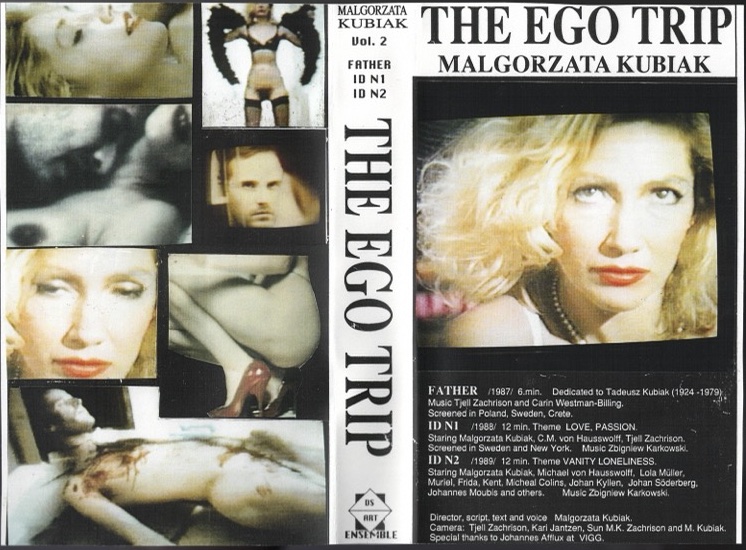
Małga and I go way back. For a long time, I have been thinking of how to approach her work as a professional. As a child growing up in the neighbourhood of Haga, Gothenburg, I observed her artistic persona while being in the same circle of friends and family as those captured in her films.
Małga Kubiak, born in 1950 in Warsaw, is an avant-garde visual artist, performer, and director of forty independent films, as well as the previous curator of the Gothenburg Poetry Festival in the 1980s and 90s. We had not met in many years when we bumped into each other at a screening I was curating at Filmform in Stockholm in September 2023. After that, I began exploring her work, specifically The Ego Trip Collection, a series of ten experimental films created between 1984 and 1994. My feelings were conflicted, as my own personal memories and relations were interwoven with these works. Małga even wrote to tell me that I myself appear in one of the films—a brief scene set in a park in Gothenburg, where my cousin, Małga’s son, is guiding me as I drive a toy car.
The Ego Trip Collection is close to private life—its events, relations, conflicts and separations. There are adults, children, dogs, and megastars—people that crossed her path throughout the decade it was created. They are performing, fucking, fighting, and acting; some of them are filmed without consent. In this movement between the inner life of the artist (Ego), the private life of her friends and family, and the anonymity of people passing by, the camera plays the role of a dubious character: at times violently intrusive, handheld, restless and seeking, at other times a playful mate, sometimes even tender.
The energy never settles, simply because this art knows no comfort.
In the Cinema of Transgression manifesto of 1984, American filmmaker Nick Zedd argues that
“All values must be challenged. Nothing is sacred. Everything must be questioned and reassessed in order to free our minds from the faith of tradition. […]We propose to go beyond all limits set or prescribed by taste, morality or any other traditional value system shackling the minds of men.”
Similar to Zedd, Małga Kubiak is obsessed with the social taboo, her emotional and intellectual trigger point. The viewer is forced to wake up, react, and reflect on their existence through shock value.
I met Małga in her apartment in the Stockholm suburb of Alby, in the fall of 2025, just before she was travelling to her hometown of Warsaw to participate in The Female Question, an international group show at the newly inaugurated Modern Museum of Warsaw. This interview precedes an exhibition I’m curating at Kunstvereien anorak in Berlin in the spring of 2026, with Małga’s Ego Trip Collection as its point of departure.
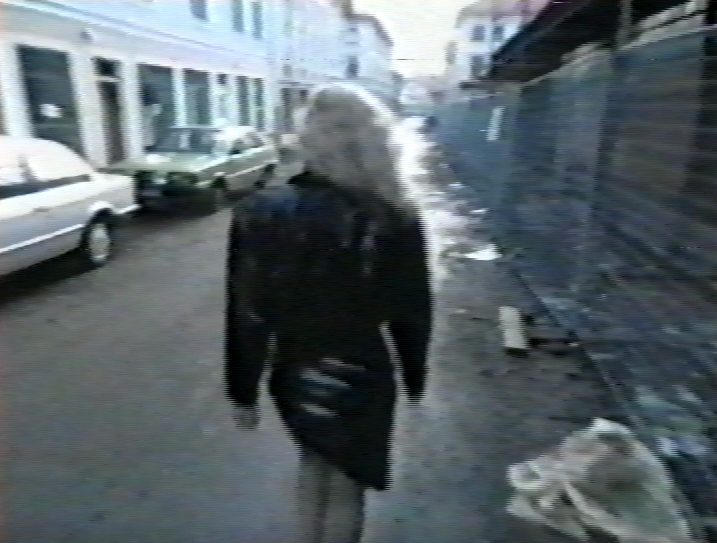
IDN2, Małga Kubiak, 1987
Emily Fahlén: How did your life as an artist begin?
Małga Kubiak: I was studying in the Art Academy in Warsaw. I was very fortunate because I got accepted on the first try. I was only nineteen years old and I had a small child. Of course, everyone said, “Hey, you got in only because you have a famous father.” I could not believe it at first, my father had to go to the academy to check the list. He phoned me and said, “You got in, come and celebrate with us!” I panicked. I went to the river and I decided to commit suicide, to jump into the river. When I was sitting at the river a man came there too. He was much older than I, a lost man. He also wanted to jump, but I told him “No, no, don’t do it. Life is beautiful.” He didn’t jump. And of course, I didn’t do it either. As you can see, I’m still here. I studied at the Academy in Warsaw for three years. But I went to that river many times afterwards. It became an obsession. A drama without texture. I guess that sometimes success is more difficult than failure to me. Success sometimes just paralyzes, whereas failure makes me want to continue, to struggle and to fight.
My daughter Agatha and I then left Poland for London in 1973. After some time, we ended up living in Christiania, Copenhagen, where I met the Polish artist and curator Gerhard Jürgen Blum-Kwiatkowski. He thought that I was a fantastic artist, especially my performance work. He brought me to the experimental art centre Ubbeboda in the South of Sweden, where I was introduced to the Japanese artist Yoshio Nakajima, one of the initiators of Fluxus Scandinavia. He invited me and Agatha to his art symposium for Bauhaus situationists. I studied performance with him together with a big group of German, Danish and Japanese artists. We went to Documenta 6 in Kassel and Göttingen Kunstmarkt, among other places. But some people got quite fed up with me because I had no money, neither the government nor my family provided for me. My father sent me parcels, though. Every other week I received packages of up to thirty kilos of food, chocolate and other stuff. But this was not enough contribution to Ubbeboda. I was good at doing art and performances, but I could not clean, I could not do the dishes, I could not cook. I moved to Gothenburg. I felt somehow connected to this place, the weather, the darkness and the rain. It reminded me of St. Petersburg. I was taking classes at Valand Art Academy, but I was mostly there at night. Many of my closest friends at the school committed suicide. There was a wave of suicides there at the time, in the mid 1970s.
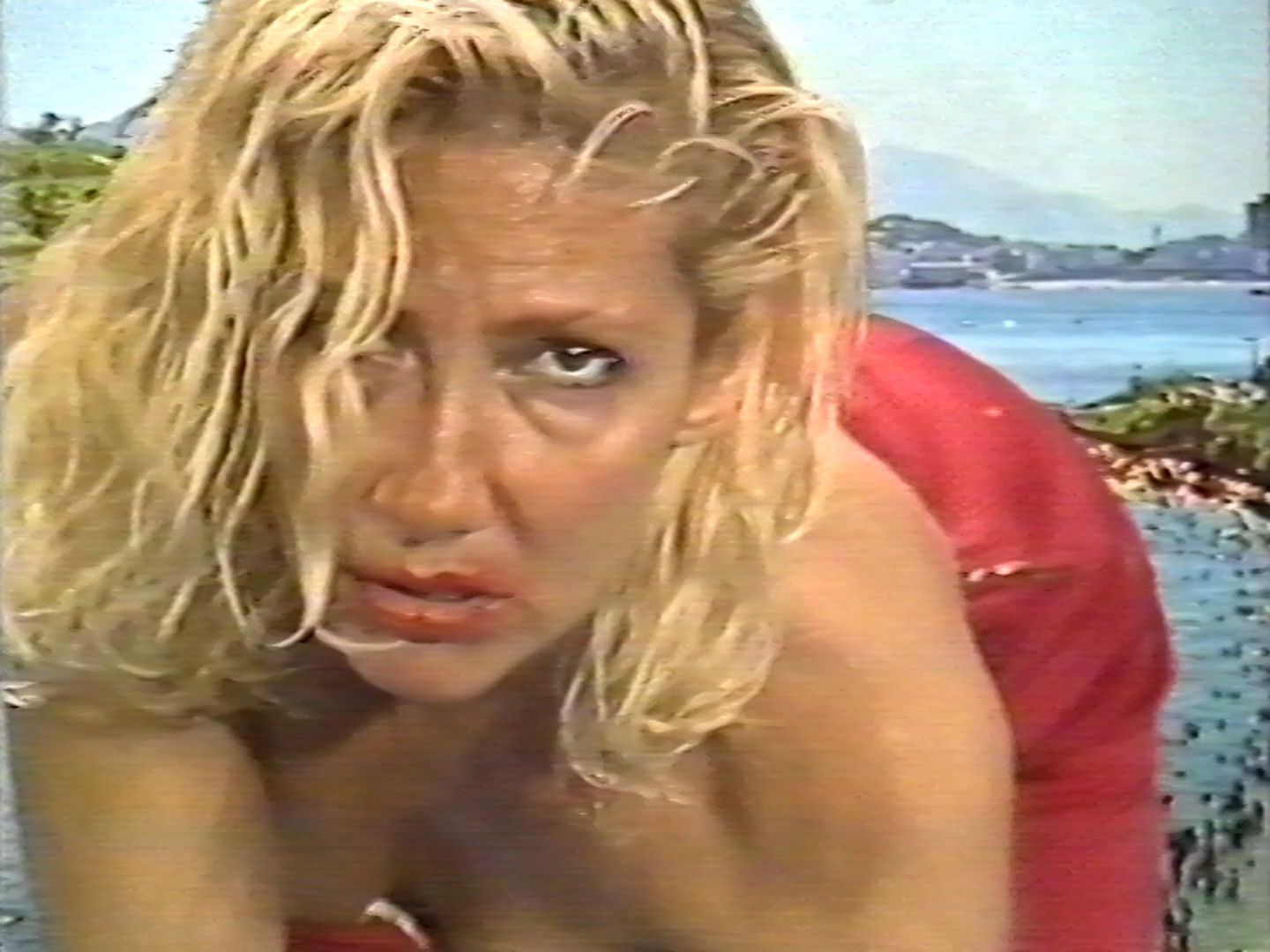
IDN4, Małga Kubiak, 1991
EF: Your father, Tadeusz Kubiak (1924 – 1979) was a celebrated Polish poet. What was your relationship like?
MK: My father started to write and publish his poetry at the age of sixteen. I adored him as a poet, as a human, and as my father. When I was very young, maybe three years old, I remember him reading Children’s Crusades by Bertolt Brecht out loud. An anti-war poem depicting Polish war-orphaned children searching for peace in the snowy, desolate winter of 1939–1940. Apparently, I got a fever from this text, and my father thought that I was a genius, that I had a very special sensitivity for art. He read all his new poems to me because he was always writing at home. I was his judge, and I was very engaged. My father’s work was very painful, but I really loved that. And this is my problem, I’m a masochist. I like the horrible stories, the horrible movies, the drastic and the painful. My films are kind of the same.
My father and I lived in the same apartment until I was eight. When my parents got divorced, my mum put me in a boarding school. The kids were mostly diplomats’ kids or divorced artists’ kids. We were four girls sharing a room. One of them was the daughter of a famous composer. One was really disturbed; she came from a circus. Her name was Regina, and I remember her very clearly, she was very peculiar. I was there for one and a half years until my mother came to her senses. She understood that my father was not coming back to her.
Back home I tortured my mother, I would say “Nudzi mi się, nudzi mi się!” [I am bored, I am bored!] I mean, it was a horror. I don’t know what I expected of my mother. She took me to the theatre, she took me to the opera. I went to my father’s job at the Polish radio house. I practised ice skating. There was nothing wrong with my life. But I complained about being bored all the time. That was like a motto for me.
I got obsessed with reading. I read Shakespeare because my mother bought the whole collection in Polish. I loved these volumes, they were white and really shiny. I read Shakespeare and my father’s poetry out loud, mostly to the mirror. But at night I couldn’t do this because my mother had to sleep. At night, I read the Greek dramas, Aischylos, Sophocles and Euripides. They were so bloody and dynamic. The Greek drama was always breaking taboos—I loved that.
My father died at a poetry festival in Yugoslavia in 1979. I saw him three years earlier in Gothenburg. He was begging me to return to Warsaw or to at least come and meet him. But I didn’t do it because I was afraid that they wouldn’t let me leave. He called me and he said, “I’m dying, I’m dying, you must come.” But I thought, he had been telling me that since I was born and he hadn’t died yet. But then he died. That year, 1979, started with the worst and coldest winter which was followed by a terribly hot summer.
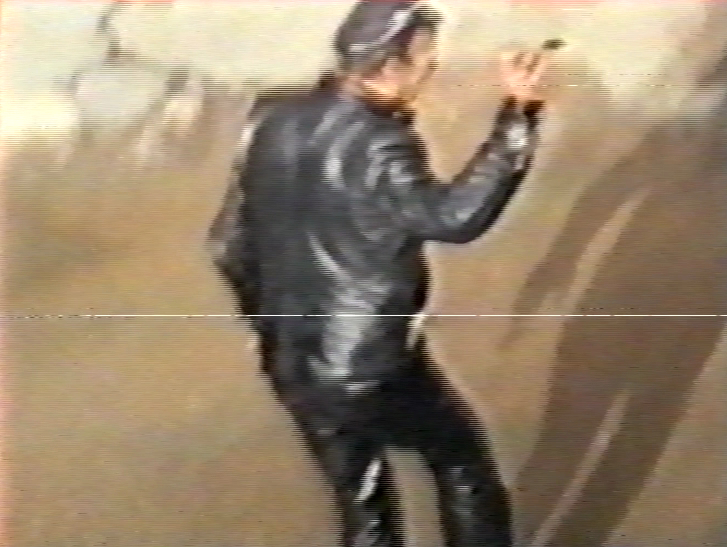
IDN2, Małga Kubiak, 1987
EF: Soon after your father’s death, you initiated the Gothenburg Poetry Festival, can you tell me a little about that?
MK: I was devastated about my father’s death, and I wanted to honour his legacy, that was why I initiated the festival. I made the first festival without any support. But the year after, my partner and collaborator at the time, Tjell Zachrisson, was so skilful at applying for money, we got maybe 50 000 SEK or more. After twelve years we had 500 000 SEK in the budget. It was really huge, but I was blowing everything on the poets. They were all the best people I could imagine. I wanted the avant-garde and I wanted the classical poets. I invited people like Kathy Acker, Lydia Lunch and Nick Cave, Mare Kandre, Tomas Tranströmer, Willy Kyrklund, Birgitta Trotzig, and Pentti Saarikoski. For me, it was very important that 50% were women and 50% were men. And absolutely no other way.
When I got hold of Nick Cave, he was at a hospital to stop taking drugs. He liked my voice and decided to come. I even talked to Serge Gainsbourg. I convinced him to come too, but he died only a couple of weeks after our call. I invited poets from lots of other different places. I would just go to the embassy and get some telephone numbers. We probably had a very huge telephone bill.
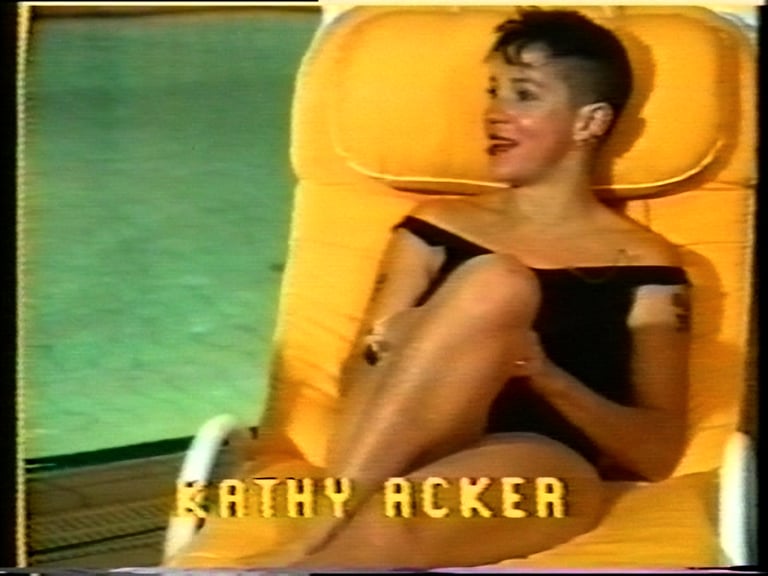
Kathy Acker in IDN4, Małga Kubiak, 1991
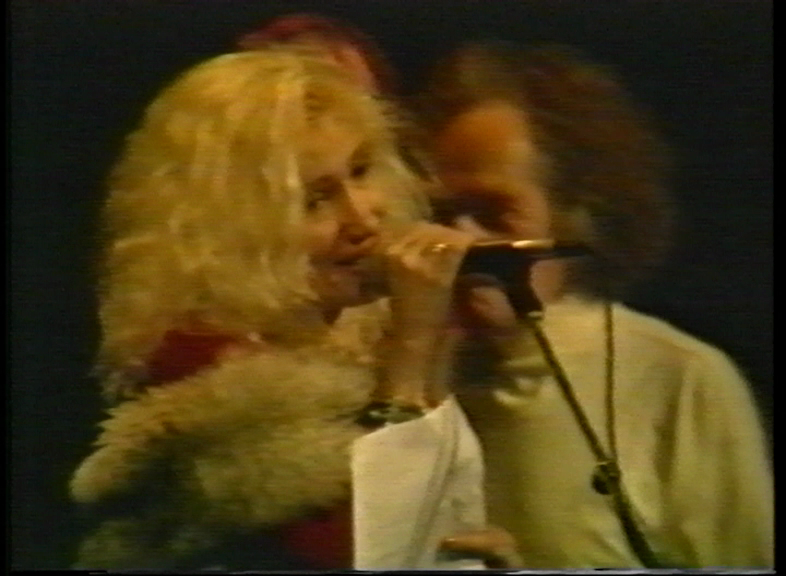
IDN4, Małga Kubiak, 1991
EF: How would you describe your early practice and position within the Gothenburg art scene in the 1980s?
MK: For me it was not enough to drink wine and smoke weed. I wanted to make art and produce art. When I want to do something, I do it. If I don’t have the specific equipment I use the equipment at hand. But I had problems establishing myself in Gothenburg. In the 1980s there were only boys who wanted to lead everything. But I was a single child, a child of artists, and I had my own drive. Since I spent all my childhood at theatres, operas and in literary circles, I was educated and I didn’t allow myself to be excluded. I was really a pain in the ass. I had to fight myself through, I didn’t want to be excluded in that patriarchal society.
When I write my texts or when I make my films, I feel more like a man. But I don’t want to be a man and I don’t want to be a woman. I want to be both, especially when I’m working. And that is also why, in the family, I could never fully assume the role of a woman. I have to be a free human being and nobody can tell me what to do.
At Frölunda culture house, in the suburb of Gothenburg, I learned how to edit film. Tjell and I took a big bank loan to buy a VHS camera, tripods and professional lamps. We were both planning to make films, huge films! We were friends with artist Carl Michael von Hausswolff and he had a lot of friends from New York, like Richard Kern and Nick Zedd. Their transgressive work became influential to me. I was like, “Wow! The dirty is not illegal, I can also manifest that kind of freedom.”
I was mostly filming at home in our apartment. When I was editing the work at Frölunda culture house, I was a bit embarrassed because the sound of the sex scenes was leaking out. On the other side of the wall there were elderly men hanging out reading newspapers. I had to fight with myself already then. But I challenged myself and I stopped caring what sounds were leaking from my editing closet. And I guess they stopped caring too.
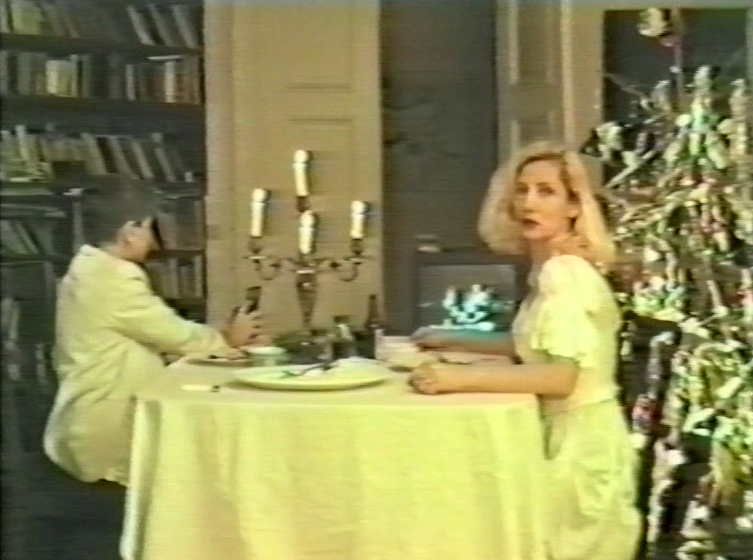
IDN4, Małga Kubiak, 1991
EF: What ideas or interests were you driven to explore in your The Ego Trip Collection series of films (1984–94)?
MK: In this collection I sought to describe my own world, not as in my home, my studio, or my poverty, but the world inside my head. It’s an intimate biographical work. I wanted to get into taboos. I was portraying myself in ways I found interesting. I was, for example, interested in filming masturbation. I was loaded with information from high-class Polish culture, and the avant-garde was very present, as well as flower power and sexual freedom. It was just served to me. All of this was explored in the work. I was filming documentary material too, drug dealers and police outside my window in the neighbourhood of Haga in Gothenburg. I never considered that it could be a problem for the drug dealers, that it could be a problem for me, that I was doing something illegal. I was just standing there with my camera filming, and it was so exciting because I felt like “I’m in New York, and I’m making a New York movie, I’m a New York director!!”
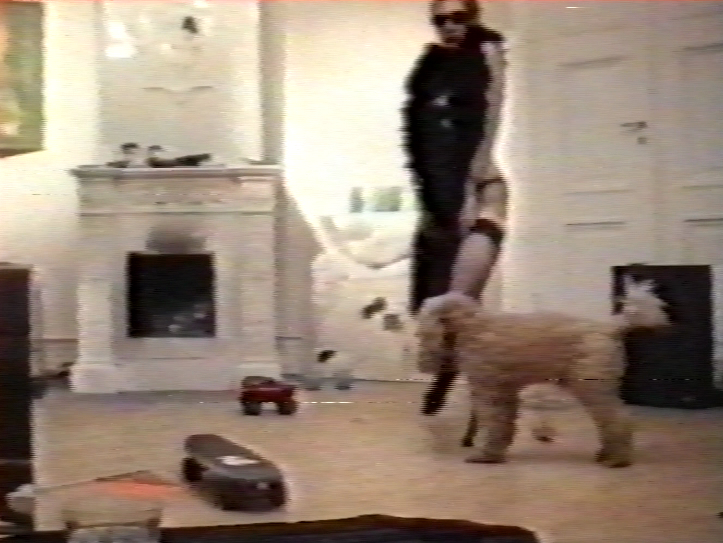
IDN2, Małga Kubiak, 1987
EF: Taboo is very central in these works, why is that?
MK: I like provocation and I don’t fear it. I like the challenge of opening up the taboo, but also to show that most taboos are not dangerous. I started to film myself nude. I was always interested in nudity. Since I had sex, that was something I had access to—I had sex and therefore I wanted it to be in my films. I’m not really an exhibitionist, but of course I can use it as a joke. Like “Okay, I’m going to this office and all these people know what my vagina looks like.” I like to play with people’s fear, so they think: “Wow, this is horrible, horrible, horrible!”
When I was working with the Super Ego, I would say that there was no difference between my face and my vagina. They were both features of my body. Somehow I knew of course that there is a difference, but intellectually I could claim them equal.
Being a child, around six, seven, eight, I had such discussions, not with God, but Jesus on the cross! I went to the church and looked at the cross and I kind of tried to get something out of this conversation. I was born Catholic but I was never indoctrinated.
I just liked the drama of Jesus, the handsome body on the cross. I was kicked out of religion class when I was seven because I was drawing Jesus naked on the cross. I came home crying and showed it to my parents and they were laughing. I drew Jesus without balls. I didn’t know about the balls. The dick without balls was an image I recalled from when I was playing with my cousin in the snow. I made a snowman and he pissed on it. He just put his little thing out and pissed on the snowman. I was so angry because the snowman turned yellow. But I have never forgotten the sensation of that, the judgement and surprise. These kinds of images stay with me forever. I didn’t know that boys had balls because my father didn’t walk naked at home. So this Jesus I drew in school had only a penis.
EF: How do you understand the relationship between life and art?
MK: I have never been able to separate life and art. And also, I could never separate children from grownups. I guess it’s because I’m a child of artists, so I have grown from it, through it. My parents didn’t hurt me, that’s how I see it. I’ve gotten questions for why I’m including children. I don’t feel any guilt. I think it’s very important, and the major parts of my life are present in these works.
One of the most important scenes is when my son is very young and he says, “Uh-huh, so it’s my birthday in one week? But you told me it’s in three weeks?” And he looks at me with his big shimmering eyes like, “Mother, why have you been lying?” And I mean, the lie is true and not true, because time is moving but for a child to grasp that—it’s like magic. I put it at the beginning of The Ego Trip Collection – ID N4 because it’s so powerful. When filming the child, it’s about the body language, the eyes, and the short words.
In another film in the series, Father, I’m confronting my own parent with a similar lie. I have this sentence, I say: “Father, you told me death is beautiful. Did you lie to me? Come back.” All the time you are confronted with what is not true yet is not a lie. In my whole film production I’ve been interested in those existential questions, but I don’t want the people who watch my films to be presented with answers. I am not a teacher. The approach is more like a poet, reaching a deeper truth through a single moment, or a fragment of thought.
People adore my work, but I think that they also think, “How does she dare? And why?”
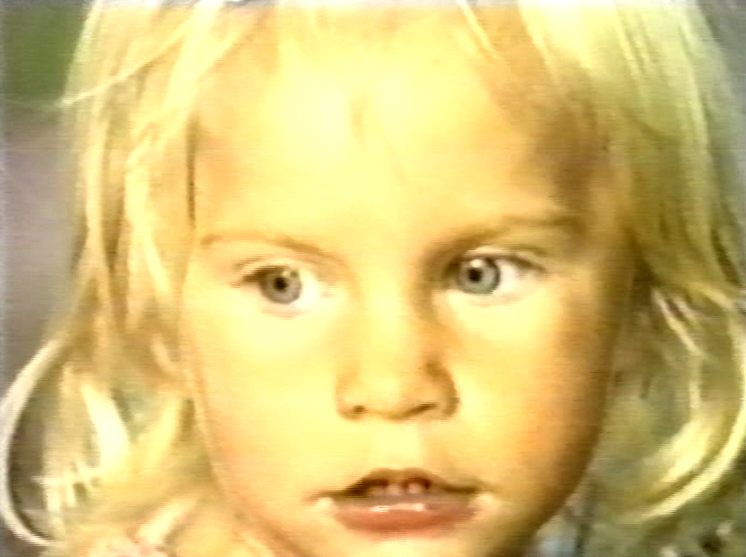
Young Emily Fahlén in IDN4, Małga Kubiak, 1991